Thursday, 23 February 2017

Social Action Evaluation


Social Action Evaluation


When I started the Social Action Project I wasn't sure what issue I wanted to try and tackle as I was interested in exploring multiple problem areas in today's society. After researching a few areas such as nuclear warfare and bullying I decided to create my project work around racism. I'm passionate about this subject as I'm lucky enough to live in a place where I am in the majority, I don't know what it's like to be looked down upon and treated with disrespect wholly because of my race and what I look like. Sadly though, many people are being discriminated against and shunned purely for something that is out of their control, something that is only on the surface, a different pigmentation in the skin and yet we are all the same, human. Through this project my aim is to give those discriminated against a chance to be heard and those of us choosing to ignore it, a chance to open our eyes and see that we are all equal.

Overall I wanted to achieve a piece with multiple messages, different art works on the same sized space connected by one running theme, racism. The way I did this was by choosing to make a textile box, size squares of fabric with different ways of showing equality that will be joined together to make a cube. The various fabrics I chose were all in a monochrome scale with a couple of exceptions, I chose monochrome because black and white have always had a big divide, so I thought by mixing the two and using different shades of grays and black and white stripes it would portray a joining of races. I did a few pages of experiments in my art book which determined the art I would put on it, one showing two humans almost in an equals sign, another saying "Racism is Real". These statements and art pieces were really important to me in order to get my message across.
Using fabrics and needles work was a big step for me, I've never done anything like that before but I thoroughly enjoyed it, I practiced a variety of techniques in order to have the sewing the way I wanted it and I ended up finding it vert therapeutic, I still need to spend a lot more time practicing in order to improve but I would happily challenge myself to do it again perhaps for my Final Major Project.
My inspiration for this piece comes from my image research. All the images I researched were from either the South African Apartheid or the Holocaust which happened fairly recently in history terms but in technology it didn't so all the images were in black and white which influenced my decision to base my final piece on a monochrome pallet. All of my research images are very raw and saddening to look at because they're reality. It's difficult to re-create that reality into a textured art piece which is why I took the decision to make my final piece more informative. The aim of this is to try and open peoples eyes to the reality of what inspired me.  

 A problem I faced in this project was time management. I didn't get to finish my final piece which doesn't actually disappoint me too much, I wanted to spend time on this project as it's something I'm very passionate about and to rush it wouldn't have felt natural to me. If I had tried needle work in the past then maybe I would've known how much longer it would take so a goal for my next project is to plan forward more and give myself more time to finish things that are important to me as an artist.

 Megan Chilcott.


Tuesday, 17 January 2017

Social Action - Racism Image Research


Racism Image Research


I chose these images because they reflect real people in real situations. There is complete sadness behind each one of them. They lack equality which is painful and sad as we are all humans and no one is better than anyone else, we're all the same. 

Saturday, 14 January 2017

Social Action - Racism Research

Social Action

Racism Research


The South African Apartheid

Under the apartheid system, nonwhite South Africans, who comprised the majority of the nation’s population, were forced to live in separate areas from whites in both rural and urban areas. The districts set aside for nonwhites were generally much poorer agriculturally and located farther from transportation hubs and offices, which put their inhabitants at a disadvantage when getting to and from work and even completing basic tasks like shopping for groceries.

Nonwhites had no say in the politics of South Africa, and were required to have documents or passes in order to move from one area to another, which escalated the levels of hardship experienced by the people.


At first, apartheid was a social movement, but it was signed into law under the National Party with the adoption and passage of the Population Registration Act of 1950. This legislation created framework for apartheid by classifying South Africans according to their biological races. Then, the National Party enacted a series of land acts, which collectively set aside over eighty percent of the nation’s lands for whites. In an egregious display of authority, the government evicted thousands of nonwhite South Africans from their rural homes, driving them into cities and selling their land to whites for farming and ranching.

Hitler and The Nazis
Hitler had firm racial policies and believed that non-Germans should not have any citizenship rights. There were many groups of people who were targeted by Hitler's policies, but none more so than the Jews.

The Nazis believed that only Germans could be citizens and that non-Germans did not have any right to the rights of citizenship.

The Nazis racial philosophy taught that some races were untermensch (sub-human). Many scientists at this time believed that people with disabilities or social problems were genetic degenerates whose genes needed to be eliminated from the human bloodline.

The Nazis, therefore:
-Tried to eliminate the Jews.
-Killed 85 per cent of Germany's Gypsies.
-Sterilised black people.
-Killed mentally disabled babies.
-Killed mentally ill patients.
-Sterilised physically disabled people and people with hereditary diseases.
-Sterilised deaf people.
-Put homosexuals, prostitutes, Jehovah's Witnesses, alcoholics, pacifists, beggars, hooligans and criminals - who they regarded as anti-social - into concentration camps.

The Untouchables in Modern Day India

More than 160 million people in India are considered Untouchable, Human rights abuses against these people, known as Dalits. They also refused their children access to school. Dalits are not allowed to drink from the same wells, attend the same temples, wear shoes in the presence of an upper caste, or drink from the same cups in tea stalls.India's Untouchables are relegated to the lowest jobs, and live in constant fear of being publicly humiliated, paraded naked, beaten, and raped with impunity by upper-caste Hindus seeking to keep them in their place. Merely walking through an upper-caste neighborhood is a life-threatening offense.


Tuesday, 20 December 2016

Image Research

Image Research - Sustainability


The expression sustainable art has been promoted recently as an art term that can be distinguished from environmental art that is in harmony with the key principles of sustainability, which include ecology, social justice, non-violence and grassroots democracy.

Sustainable art may also be understood as art that is produced with consideration for the wider impact of the work and its reception in relationship to its environments (social, economic, biophysical, historical and cultural). (wikipedia)

Saturday, 17 December 2016

Image Reseach

Image Research - Racism

I chose these images to use as inspiration for my flag design. A common link between all these images is that they show that we are all human, not matter what race. I want to also use that in my flag design as I think it is a strong message of truth.


Image Research

Image Research - Political Textile Pieces

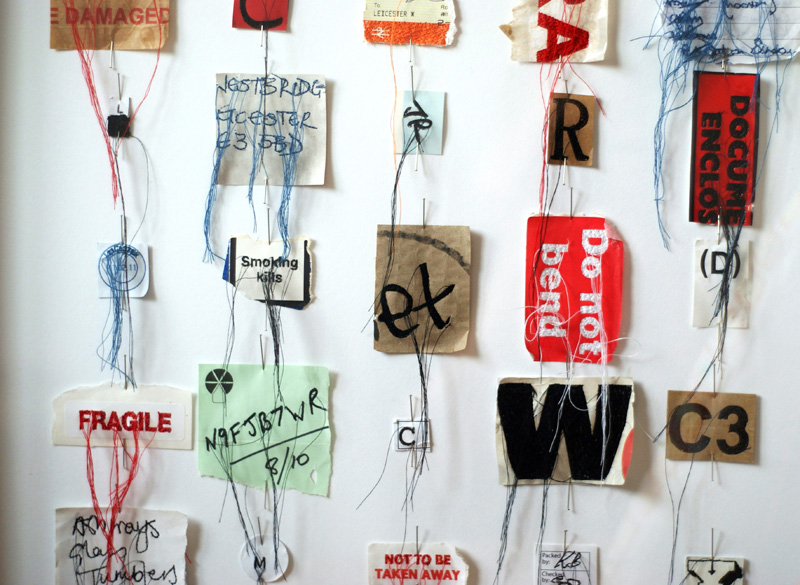
I've chosen these textiles pieces to inspire my own textile piece as they show different techniques such as, sewing with various materials, embroidery, dress making and print making. I would like to use either embroidery or sewing with various materials in my artwork as I really like the look. 


Friday, 16 December 2016

Image Research

Image Research - Bullying shown in Art and Photography


I've chosen a selection of 5 images that portray forms of bullying and how bullying affects a variety of people. A common link in all forms of bullying is words, I will also being using the theme of words in my piece as I want to show their effects in the destruction of peoples lives.