Tuesday, 31 May 2016

ADITL - Artist Reference - Dirk Dzimirsky

Artist Reference

Dirk Dzimirsky


[1] Dirk Dzimirsky (b.1969) is a German artist best known for his hyperrealistic drawings and paintings depicting human being in a somewhat dark artistic mood, relentlessly revealing the vulnerability and tragedy of their condition. The artworks are based on a selection of photos. All the complex details and surreal. overreaching compositions of light and shadow intend to create a dramatic feeling and intense emotions for the viewers. 

Dirk Dzimirsky mostly portraits female models in his artworks. It is not his goal to create nice or pleasant portraits, as close to the subject as possible, but to display the intense emotions, that are concealed beyond the visual surface. The subjects have a very strong narrative character, each face telling it's own story. Lost souls, wounded beauties, fragile personalities.
I would love to capture the intensity of emotion that Dzimirsky captures in his artwork.
Dzimirsky's photo-like portraits are organic and atmospheric, he uses a mixture of light and dark diffused tones to acquire the beauty and realism in all his work. He uses soft and accurate lines that blend seamlessly together which creates his trademark unblemished human form that he's able to capture with graphite. I am completely inspired by Dirk Dzimirsky's talents and aim to show true, pure emotion in my work just as he does.


Megan Chilcott


Monday, 23 May 2016

ADITL - The Museum of Feelings

ADITL

The Museum of Feelings


[1] THE MUSEUM OF FEELINGS EXHIBIT
The first museum that reacts to emotions—and turns them into art.

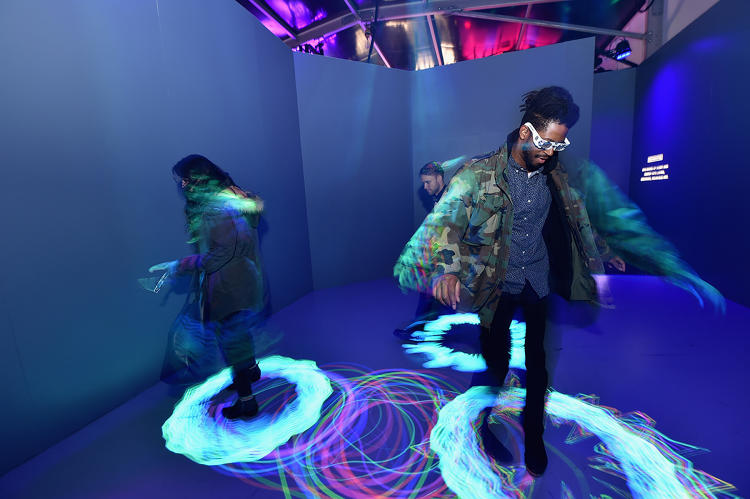
Is New York feeling exhilarated, calm, optimistic? The Museum’s exterior changes color to reflect the the mood of the city by scraping social media and other real-time data.

Each installation invites emotional interaction. Touch, feel, play, listen, imagine and breathe. Step into the first kaleidoscope controlled by emotion. Float through the feeling of calm on a lavender cloud. Use your own biometric data to create a MoodLens—or unique emotional selfie—and match it with a perfect custom fragrance.


The Museum is innovative. It's able to provoke and show emotion by using memory, scents, colours, textures. I am very inspired by The Museum of Feeling and I will be using the Colour Psychology that it uses in my work, the though of associating colour and emotion really intrigues me.


[1] https://www.themuseumoffeelings.com/


Megan Chilcott

Thursday, 12 May 2016

Unit 9 - Artist Statement

Unit 9

Artist Statement


As an artist I am influenced by my world. My world being my family, the nature around me and what I can do and achieve in my life. I enjoy making work based around my two younger brothers Max and Tommy, they influence my work heavily and my goal is to document their younger years so that in the future they'll be able to look back and see their lives and smile. I am also inspired by the beauty in sunrises and sunsets, their vivid colours at the beginning and end of days encourage me to reflect on my day and whether I've lived it to my full potential; the reason for this is that I struggle with fairly severe anxiety and I am often stuck on whether I should go out and capture what I would like to or whether I should stay in away from the outside world, this can affect my work greatly and hinder myself but it can also help my ideas come forward and present themselves for me to use.
I like to think that my style is mainly photography and pencil portraits, I like to capture people, their facial expressions and emotions, I've found that pencils show depth really well and and I'm able to form a comprehensive piece of art with a few pencils. I also enjoy working with prosthetic make up, I like the fact that you can turn yourself into someone or something different. I'm completely self taught and I often do very gruesome, gory projects. I was inspired by horror films and programmes like Doctor Who, I found the make up intriguing and decided to give try it for myself and I ended up really enjoying it and now it is my favourite medium to work with given that I have the materials, the time and the right idea planned well.
So far on the course I have enjoyed and achieved skills in life drawing, I've learnt how to capture the unique lines and shapes of the human form and present it in different mediums such as pencil, chalk, charcoal, pen, paint and ink. I appreciate being able to show a sense of vulnerability or alternatively a burst of life through my life drawing.
At the moment I'm not too sure about what I want my career to be, I'm using the skills and experience that I'll gain from being on this Art and Design course at Plymouth College of Art to help influence my next move in life, I hope that my career could have something to do with prosthetic make up or perhaps photography, I feel as though i need more experience in both fields before making my decision but something based around either of those areas would be amazing.


My website:- http://megseypegsey.wix.com/meganchilcott

Thursday, 14 April 2016

Unit 9 - Progression Opportunities in Art and Design

Unit 9 


Prosthetic Make Up

Courses-
  • BA (Hons) Hair, Make up and Prosthetics for Performance (full time) at London College of Fashion


Full Time over 1 year.
"Our excellent workshops, teaching by industry practitioners and work placement opportunities on this prosthetics design course will help you to succeed as a hair, make-up and prosthetics artist, working to support and transform performance."


Course Entry Requirements

Entry to this course is highly competitive: applicants are expected to achieve, or already have, the course entry requirements detailed below.
Three ‘A’ level passes at grade C or above (this course requires 240 UCAS tariff points) PLUS passes in three GCSE subjects at grade C or above


Fees
Course Tuition Fee (For September 2016/17) = £9,000
Average Living Costs (The figure shown is an indicative annual amount for a student living independently in privately-rented accommodation in London. See our living costs page for more information.) = £16,120
Bursaries of £1,000 awarded to eligible UK students studying an undergraduate course at University of the Arts London. = -£1,000
Overall = £24,120
  • Foundation Degree in Media Make-up and Character Design at The University of Bedfordshire
 Full-time over 2 years, part time over 4 years.
"You will be prepared for a career as a make-up artist in television, film, theatre, prosthetics, advertising and fashion industries. On completion, you may continue onto BA (Hons) Media Performance. This course will enable you to work on film, fashion events or in the performing arts. You will gain specialist knowledge and expertise in the theory and practice of preparing performers for the stage, catwalk or screen. The combination of character creation with its emphasis on prosthetics and special-effects make up, with high fashion, editorial and period makeup will enable you to build up your portfolio and prepare you for freelance work across performing arts, events and in media/TV/film industry. You will also gain knowledge in laws and regulations and will develop entrepreneurial skills, helping you establish as a freelance make-up artist. You will work within the media facilities alongside student actors, TV producers and presenters. You will have the opportunity to work with scriptwriting or production management teams from different degrees or in collaboration with local theatres, TV productions and the Judith Blake Theatre. You will develop academic skills to undertake research into the field of make-up. The contextual understanding will help you implement your research findings in creating your characters. You will understand the importance of reflection and of critically evaluating your work, which will develop your skills."

Entry Requirements
120 UCAS Tariff points (80 from 1 A levels - or their equivalent) and interview.

Fees (1 Year)
Course Tuition Fees (For October 2016-17) = £9,000

Average Living Costs (My Nanny lives in Luton so there's a chance I could rent a room off of her in her house (or alternatively her flat for around £400 pcm.)  £400x12 = £4800
Food £25 per week. = £600

Overall = £14,400

Set Design

Courses-


  • BA (Hons) TV and Film Set Design at The University of South Wales
Full time 3 year course.

"One of only two specialist TV and Film Set Design courses in the UK, this hands-on course will prepare you for work in a professional art department in the film and television industry.
You will understand how drama and entertainment are developed from script to screen. For a versatile portfolio, you’ll learn how to design for single and multi-camera productions over different genres, including period drama, science fiction, situation comedy, and light entertainment. Studying TV and Film Set Design in Cardiff, you’ll benefit from being near major BBC production facilities and other independent producers, and from opportunities to work on real projects with industry. Previous partnerships have included work experience on BBC dramas, including Doctor Who, Atlantis, Casualty and Wizards vs Aliens. USW’s TV and Film Set Design degree has a strong reputation in industry and graduate success covers wide-ranging productions, feature films, light entertainment, commercials, music videos and TV dramas, including Star Wars, Anna Karenina, Doctor Who, Da Vinci’s Demons, The Mimic, Cowboys and Aliens, Celebrity Juice, The Inbetweeners and Benidorm. As a student in our Cardiff Campus, you’ll be a part of our inspiring creative community and have the chance to collaborate with other creative industries students such as journalists, photographers, actors, writers and musicians."
Entry Requirements-
Interview- An interview and portfolio are required for this course. Your portfolio should demonstrate strong artistic and design abilities. Your portfolio should be a carefully constructed selection of your work, preferably produced during your most recent course of study, and can include any personal work or projects that you feel are relevant to the course. All work should be well organised and presented. You should be prepared to discuss your work at interview as well as the designers and/or artists who have influenced you.
Qualifications- BCC to include an art and design related subject.
Year Plan-
Year One
  • TV & Film Set Projects
  • Surveying & Recording Spaces
  • Scenic Construction Principles & Practice
  • Methods of Analysis
  • Visual Studies TV & Film Design
Year Two
  • TV & Film Set Projects
  • Professional Practice (TV & Film Design)
  • Digital Visualisation
  • Big Picture Small Screen
  • Critical Analysis
Year Three
  • TV & Film Set Design Major Project
  • TV & Film Design Minor Project
  • Dissertation
Fees-
Tuition Fees = £9,000
Average Living Costs-
Average Living costs in living in Halls of Residence*
Estimated living costsWeekMonthAcademic Year
Rent£79-£160*£355-£720£3,318 - £6,720
Food£32£144£1,344
Toiletries/Laundry£9£40.50£378
Telephone/TV Licence£9£40.50£378
Total£129 - £210£580 - £945£5,418 - £8,820
Average Living costs in living in Private Accommodation
Estimated living costsWeekMonthAcademic Year
Rent£60£270£2,520
Bills£13£59£546
Food£32£144£1,344
Toiletries/Laundry£4£18£168
Telephone/TV Licence£5£23£210
Total£114£514£4,788
Overall (Living in halls) = £17,820 (max)

Personal Development Plan


Target
How
Support/Resources
Target Date
Achieved
To improve my skills in theatrical make up and prosthetics.
Research methods and watch videos of make up artists and research their work.
I will use the internet for this, particularly Youtube as it has hundreds of free online tutorials.
Summer 2016

To develop my portfolio of  my work.

Focus of coming up with innovative ideas and use models (friends) instead of doing the work on myself to increase productivity.
Create mood boards to develop my ideas in order to create unique work.
Also I will ask friends and family to be my models.
Summer 2016

Use theatrical/ prosthetic make up in my current work in order to show my skills and passions integrating into my work.
Find a way to use make up in my project, take pictures or my work and use it as idea development or alternatively in my final piece.
Use photography resources in order to capture the feelings in the make up.
June 2016

Improve photography skills.

Go to workshops supplied by PCA.
Purchase a good camera and learn how to photoshop.


Sunday, 10 April 2016

A Day in the Life

ADITL - Unit 8


A Day in the Life


This blog post marks the end of The Others project and the start of Unit 8 project - A Day in the Life.

Thursday, 17 March 2016

The Others - Evaluation

The Others - Evaluation


Phan Thi Kim Phuc.jpg
My initial idea was based around how war and destruction affects young people in third world countries. I was inspired by a girl called Phan Thi Kim Phuc, who was photographed at the age of nine during the Vietnamese war, the photograph shows her naked running on a road after having her back severely burnt by the South Vietnamese napalm attack on June 8th 1972. Through using Phan’s story I wanted to create a pot that shows innocence and youth being damaged, I came up with an idea to make a pot that has one side completely smooth and the other side altered in some way. After going through some design ideas I chose to make the pot into a shape of a torso and have the back of the pot look as though it is melting or being burnt. This symbolises Phan’s pain literally and metaphorically and shows that through this torment her innocence has been stripped from her.


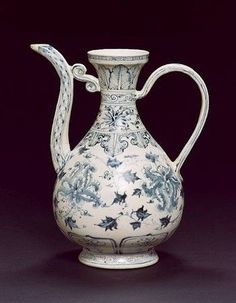
Vietnamese.jpgTo help me help me understand Vietnamese culture I chose to research traditional Vietnamese designs on pottery. I came across blue and white porcelain which is very soft and intricate designs traditionally with crisp white and cobalt blue. [1]I found that the majority of the late 14th/early 15th century Vietnamese blue and white consisted of wares decorated with floral or cloud like motif. There are spur marks on the inner base of bowls and plates. The second half of 15th century was the golden period of Vietnamese blue and white. During this period, the Vietnamese potters introduced their unique style of decorations and many new innovative vessel forms. Archaeological surveys revealed that two districts in Hai Duong Province, Nam Sach and Binh Giang have the greatest concentration of kilns that produced blue and white wares.  Among them Chu Dau in Nam Sach and  Ngoi kiln complex in Binh Giang were the biggest producers. With this information and with help from pictures of this pottery I began drawing out some designs and trying to encapsulate the Vietnamese culture with these designs.


When it came to making the pot I had no problems, the shape was just as I envisaged and with hindsight I think that I should have just left it there as it would have come out crisp and white. But I decided to attempt the traditional Vietnamese pattern of the cobalt blue intricate designs and on the melted affect side I decided to place blue on the drips. While doing this I found it very difficult, the colour wasn’t going on great as it was heavy in some areas and barely noticeable in others, also the colour wasn’t the cobalt blue I was hoping for, it was more or a turquoise. I knew that it wasn’t going to be great so once it was fired I decided not to glaze it as I didn’t want money to be wasted on something that I wasn’t proud of.


The successes on this project have been the research, I enjoyed looking into young people's lives that are struggling a lot more than people in the world we know are and seeing the strength of Phan Thi Kim Phuc after the pain that she went through as a nine year old girl. Also I believe that the shape of my pot was very unique and different and I think that it showed the message of innocence being ripped away from this young people who have to face war every day of their lives. Having looked at all my successes I also recognise that there are targets I need to set myself to enable development.  These are taking more time to think about what I’m doing, if i had spent more time thinking about the design of my pot and planning it out more thoroughly then maybe my pot would have turned out how I wanted it to. To conclude I believe that I showed the message that I wanted to but I didn’t necessarily do it to my best ability and I could have improved it had I spent more time on the planning.

Megan Chilcott


[1] http://www.koh-antique.com/vietceramics/vietceramics2.htm


Solar Energy

Solar Energy
Information

                             Solar cells

a motorist buying a ticket from a solar-powered ticket machine
Solar-powered ticket machine
[1] Solar cells are devices that convert light energy directly into electrical energy. You may have seen small solar cells in calculators. Larger arrays of solar cells are used to power road signs in remote areas, and even larger arrays are used to power satellites in orbit around Earth.
Solar panels
Solar panels do not generate electricity, but rather they heat up water. They are often located on the roofs of buildings where they can receive heat energy from the sun. The diagram outlines how they work.
Cold water is pumped up to the solar panel, there it heats up and is transferred to a storage tank.
A pump pushes cold water from the storage tank through pipes in the solar panel. The water is heated by heat energy from the sun and returns to the tank. In some systems, a conventional boiler may be used to increase the temperature of the water.

Advantages

Solar energy is a renewable energy resource and there are no fuel costs. No harmful polluting gases are produced.

Disadvantages

  • Solar cells are expensive and inefficient, so the cost of their electricity is high.
  • Solar panels may only produce very hot water in very sunny climates, and in cooler areas may need to be supplemented with a conventional boiler.
  • Although warm water can be produced even on cloudy days, neither solar cells nor solar panels work at night.


Megan Chilcott